Shichihonyari 七本槍
Shichihonyari = Seven Spears
A name in honour of the seven samurai who fought in a historic battle for Toyotomi Hideyoshi (one of the greatest feudal lords in Japanese history), they were named the Seven Spears of Shizugatake.
It was near where this battle was fought on the northern tip of the snowy Lake Biwa, where one of the oldest breweries in Japan, almost 500 years to be exact, continues to brew quality sake with a focus on preserving its rich history and continue to evolve through experimentation and new challenges to pass down to further generations.
Founded in 1534, the 15th-generation Yasunobu Tomita has been leading this historic brewery since 2002. Considered to be one the “new generation” of brewers, prior to his return to the brewery he lived and worked in Tokyo, studied at the National Research Institute of Brewing, and travelled to New York, France, and Scotland to see sake bars, wineries and distilleries. Drawing inspiration from his experiences abroad, he realized that sake had much more potential to grow, especially by focusing locally within the brewery’s city and prefecture, and by refining cellaring/maturation techniques of finished sake to give extra dimension or depth to the flavours through aging.
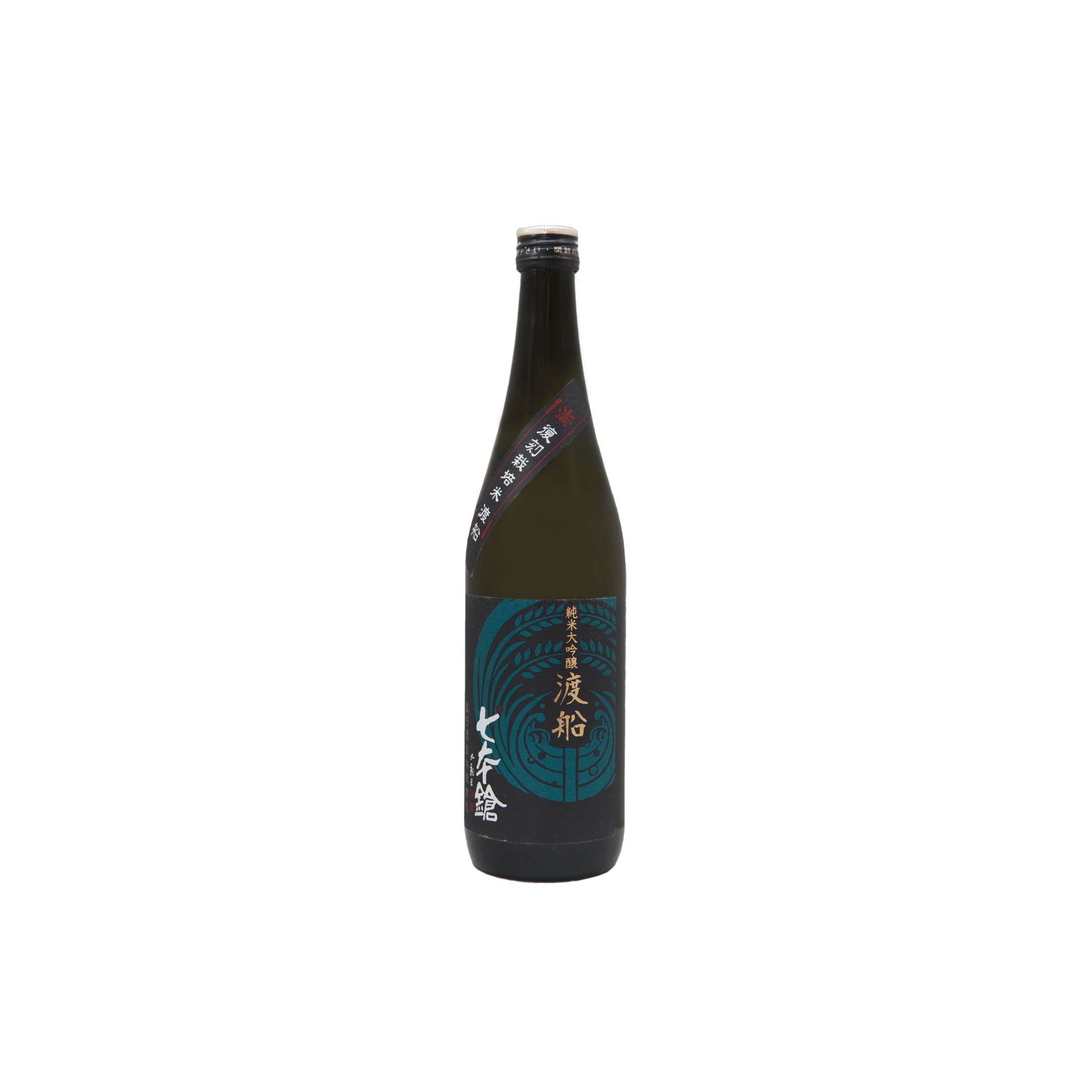
Since 2001 Tomita Shuzo has been working with local organic rice farmers, sourcing quality sake rice like: Tamasakae, Ginfubuki, Wataribune, Yamadanishiki and a few others. Even worked with a local agricultural high school where the students grow the sake rice that then gets used for the Shichihonyari sakes.
The building that houses the brewing facilities, or kura, was built in the Edo era and is still reminiscent of the days when the samurai were still around. One of the treasures there is a wooden carving inscribed with the Shichihonyari name hanging above the entrance, which was crafted by Rosanjin, Japan’s Leonardo Da Vinci when stayed at the brewery in the 1900s. The water used for brewing is from the snow melt water of Mount Ibuki, where it slowly is filtered through the earth and runs underground to the brewery well.
All sakes are crafted are rich and flavourful with noted rice umami and balanced acidity to create the structure or framework and are crafted using locally grown rice. Recently there has been the reintroduction of the labour-intense Kimoto method and using wooden barrels & buckets in some of the cuvées, to further craft sake naturally. Bottlings are generally single rice variety sakes with light filtration to showcase the flavour of the specific rice variety and there are some products where the rice had barely been polished (rice polish ratio 80%) bringing more complexity to the finished sake. Another interesting product is the Muu, a sake crafted with locally grown, pesticide and chemical-free rice. Other projects include sparkling sake and also a Sherry-cask aged sake.
The Shichihonyari sakes are definitely one of the top sakes in Japan and with the passionate and forward-thinking Yasunobu Tomita leading the brewery, the sakes will always showcase a good sense of place with great depth in flavour and complexity.